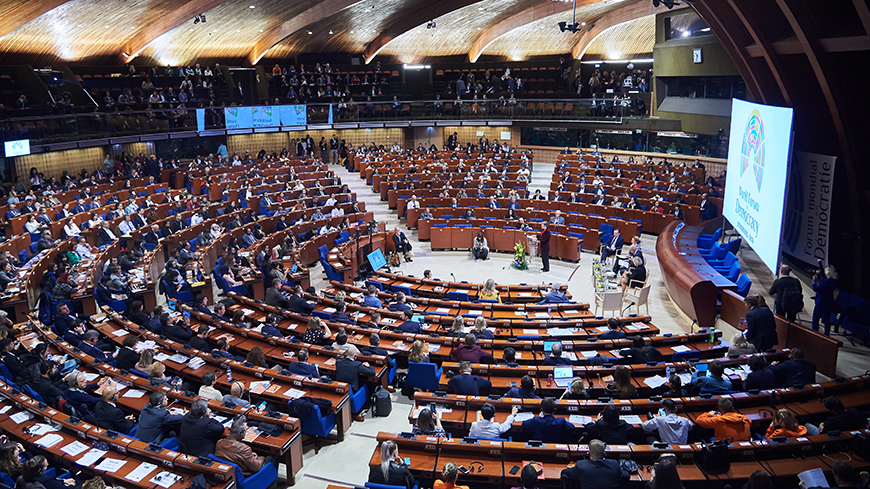
Stone and Ladi (2015) investigate the emergence of global public policy and transnational administration beyond the traditional norm of state hierarchies attempting to globalize national policies. Their study characterizes the plethora of policy-making processes beyond the level of the state but also interacting and overlapping with sovereign state policy-making processes. This field of transnational administration provides a complex network where knowledge-sharing, global policy-making, agenda-setting and decision making take place to harmonize global norms especially with respect to particular transnational concerns. Civil society groups, thinktanks, academics, scientists, international organizations, private institutions, management consultancies, international civil servants and policy entrepreneurs can leverage influence to shape transnational policy.
While the existence of this global public policy and transnational administration space presents another stratum for governing shared global concerns, there is usually no over-arching authority by which these policy networks are administered. This can lead to “inconsistency, duplication and regulatory arbitrage” (p.843). Coordination, accountability and governance are more complex, and transnational administration then lends itself to the influence of the internationally powerful (for example intergovernmental clubs like the G7 and G20 effectively weighing heavily on international fossil fuel and nuclear policy).
One thing the authors failed to mention in an article as fairly recent as 2015, is the democratization of public participation in the modern agora of transnational policy-making via social media participation. It has been seen how the rise of the hashtag has been influential in gauging public opinion on transnational issues and brought more people to the center of international decision-making. The social media originated redistribution of political power was pronounced during events like the Arab Spring which begun five years to the publication of this article in 2015. Shortly after, it contributed to the rise and election of Donald Trump, Brexit (a groundbreaking re-shaping of political Europe) and provided digital tools like social media analytics which have been a new key feature of national and transnational political processes. Ashbrook and Zalba (2021:84) highlight “the power of social media to change the information landscape” and influence the international policy-making process.
Stone and Ladi (2015) describe existing well-known public policy models and conclude that practical policy application by “street-level bureaucrats” (p.850) has a greater influence on the final interpretation of global policy than the theoretical, echoing Burton (2006:176) This acknowledged regression of policymaking power from the traditional center shows the growing importance of distributed policy-making in today’s digital contexts.
BIBLIOGRAPHY
Ashbrook, C. C., and Zalba, R.A., 2021. “Social Media Influence on Diplomatic Negotiation: Shifting the Shape of the Table.” Negotiation Journal, January 3, 2021.
Burton, P. 2006. ‘Modernising the Policy Process: Making Policy Research More Significant?.’ Policy Studies 27(3): 173-195.
Stone, D. and Ladi, S., 2015. Global Public Policy and Transnational Administration. Public Administration, 93 4: 839-855.


Leave a Reply