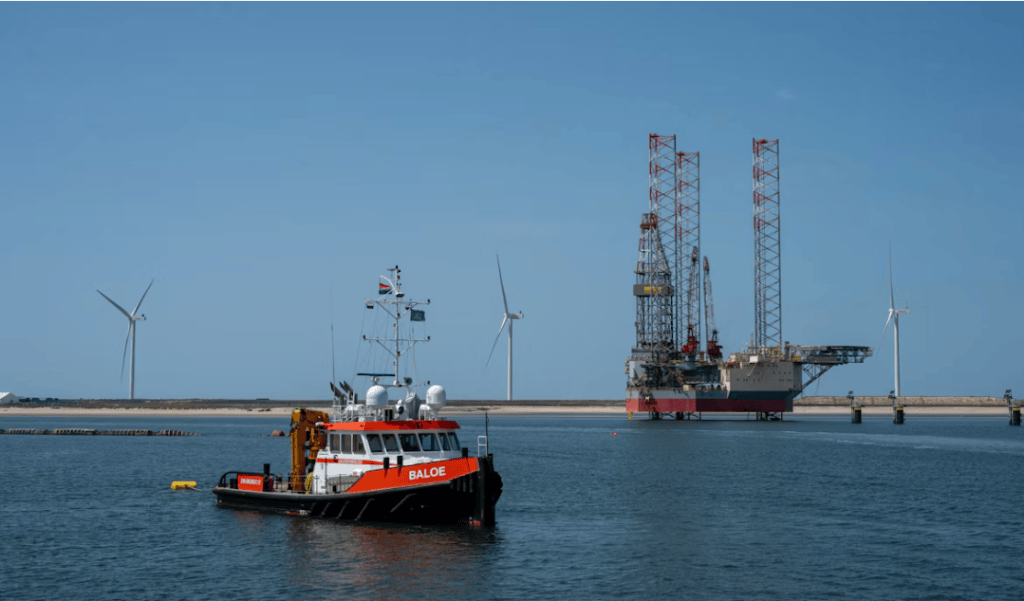
The investment paradox
The global energy transition faces a fundamental contradiction: while governments and companies increasingly acknowledge the need to reduce greenhouse gas emissions, substantial capital continues to flow into oil supply. The central question is no longer simply whether the world will need oil in the coming decades, but whether investment decisions reflect the pace and scale of change required to achieve net-zero emissions.
The International Energy Agency (IEA) provides an important benchmark for evaluating this disconnect. Its World Energy Outlook and Net Zero Roadmap offer frameworks for understanding how energy investment must evolve to limit global warming. The challenge is that investment in conventional energy infrastructure can lock in production capacity and emissions for decades, potentially leaving investors with stranded assets as climate policies, technologies and consumer preferences change.
Where oil investment stands
Oil investment has not disappeared despite the rapid expansion of renewable energy and electric mobility. Producers continue to invest in maintaining existing fields, developing new resources and expanding production capacity, responding to expected demand, depletion rates and energy-security concerns. The IEA’s World Energy Investment report tracks capital flows across oil, gas, electricity, renewables, grids, storage and other energy technologies. Its broader message is that clean-energy investment has become a major force in the global energy system, but capital allocation remains uneven across technologies and regions.
It is important to distinguish between investment needed to sustain existing production and investment that expands long-term oil supply. Existing fields naturally decline, so some spending is necessary simply to offset falling output. However, developing new long-lived oil projects introduces a different question: will future demand justify the investment if the world accelerates towards net zero? That uncertainty is especially significant for projects with high development costs, long payback periods and exposure to changing carbon regulations.
What net zero actually requires
The IEA’s net-zero pathway is not a forecast of what will happen automatically. It is a scenario showing what needs to change across the energy system to align with the goal of limiting warming to 1.5°C. Its updated Net Zero Roadmap places particular emphasis on accelerating clean-energy deployment, improving energy efficiency, electrifying end uses, reducing methane emissions and expanding infrastructure such as electricity grids.
In this framework, oil demand falls as electric vehicles displace petroleum-powered transport, renewable electricity replaces fossil-fuel generation where applicable, and efficiency reduces the amount of energy required to deliver economic output. The implications for investment are substantial. Capital must increasingly support renewables, storage, grids, electrification and other low-emissions technologies, while investment in unabated fossil-fuel supply must be assessed against a declining-demand trajectory.
The IEA has also made clear that its net-zero pathway does not imply an immediate end to all oil investment. Spending remains necessary for existing operations, decline management and energy-system reliability. The distinction is whether investment supports an orderly transition or creates excess capacity that becomes incompatible with climate objectives.
The investment gap: what the numbers reveal
The latest figures illustrate the scale of the challenge. According to the IEA’s World Energy Investment 2026, global energy investment is expected to reach approximately $3.4 trillion in 2026. Of this, around $2.2 trillion is projected to support clean energy and related technologies, compared with $1.2 trillion for fossil fuels. Oil investment alone is expected to fall below $500 billion in 2026, marking a third consecutive annual decline. Yet this remains a substantial allocation of capital to a sector whose long-term prospects depend increasingly on the speed of decarbonisation.
The problem is not simply that oil investment continues. It is whether the projects receiving funding are consistent with the demand trajectory required by the net-zero pathway. The IEA’s World Energy Outlook 2025 makes the distinction clear. Under its Stated Policies Scenario, oil demand levels off around 2030 at approximately 102 million barrels per day before gradually declining. Under the Net Zero Emissions by 2050 Scenario, demand falls much faster as electrification and clean technologies transform the energy system. These are scenarios, not predictions. Nevertheless, they demonstrate why investment decisions based on continued growth in oil consumption carry substantial uncertainty.
What should change?
Three priorities follow from the IEA’s analysis.
First, capital allocation must reflect realistic demand scenarios. Companies should scrutinise new, long-lived oil projects against the possibility of declining demand, rather than assuming that historical consumption patterns will persist.
Second, investment in clean energy must accelerate alongside improvements in energy efficiency, electricity grids, storage and electrification. Without adequate infrastructure, renewable generation alone cannot deliver the transformation required.
Third, the transition must be equitable. Developing economies need affordable finance to expand energy access, industrialise and diversify their economies. African countries, in particular, should not be expected to abandon the economic benefits of their natural resources without credible alternatives, investment and international support.
The IEA’s Oil and Gas Industry in Net Zero Transitions provides a useful framework for producers navigating this challenge. It recognises that continued investment in existing assets is necessary, while warning that a 1.5°C-aligned pathway does not require new long-lead-time conventional oil and gas projects.
The bottom line
The global energy transition is no longer merely a question of developing cleaner technologies. It is increasingly a question of directing capital towards the energy system the world needs to build. The IEA’s latest investment analysis shows that clean energy is attracting substantially more capital than fossil fuels. However, the net-zero pathway requires more than a favourable investment ratio: it demands that individual projects, infrastructure decisions and financing strategies align with a rapid decline in emissions. For oil-producing countries and investors, the strategic imperative is clear. The objective should not be to maximise oil production regardless of future demand, but to manage existing resources responsibly while building resilient, diversified and lower-emissions economies.
The transition will not happen overnight. But investment decisions made today will help determine whether the world approaches net zero through an orderly transformation or faces a more disruptive adjustment later.


Leave a Reply